
Finding Amarillo Resident Records
Amarillo keeps no master roll of residents. The right starting point depends on the question. An address usually begins with the Potter-Randall Appraisal District, called PRAD, or the City GIS map. A person from an earlier era is easier to place in a city directory, newspaper, tax roll, or obituary. Court questions belong with the court that kept the case. Custody stays split. The County Clerk, District Clerk, Justices of the Peace, Municipal Court, and state agencies each hold separate records.
Keep the evidence label with every result. A parcel card shows an appraisal or tax association. A deed index identifies a recorded party and instrument. A directory shows only that someone was listed at an address in its publication year, and no single source confirms current occupancy. Save spelling variants, middle initials, county, date, record number, and source date before moving to another index.
- Normalize the street address through USPS, then establish the county.
- Search PRAD or the county tax route for a parcel account.
- Use the official-records route for a recorded instrument.
- Use official voter status only for that narrow question.
- Compare dated directories, newspapers, maps, or tax rolls for old households.
Amarillo Records Office Routes
Potter County is Amarillo's main records jurisdiction. City limits and mailing addresses still reach into Randall County. The offices are not interchangeable. The Potter County Clerk handles Official Public Records, probate, County Courts at Law, marriage licensing, and recording, while the District Clerk holds district-court files. PRAD values property, county tax offices collect the tax, and City Vital Statistics keeps its own access route. Start with the custodian holding the record.
Potter County Clerk
500 S Fillmore St, Suite 201
Amarillo, TX 79101
806-379-2275
Potter-Randall Appraisal District
5701 Hollywood Road, Loop 335
Amarillo, TX 79118-5002
806-358-1601
The Potter County open-records routing page shows which office holds a deed, probate case, district-court case, appraisal record, or City vital record. Use it when a portal lacks the document. The route beats guessing.
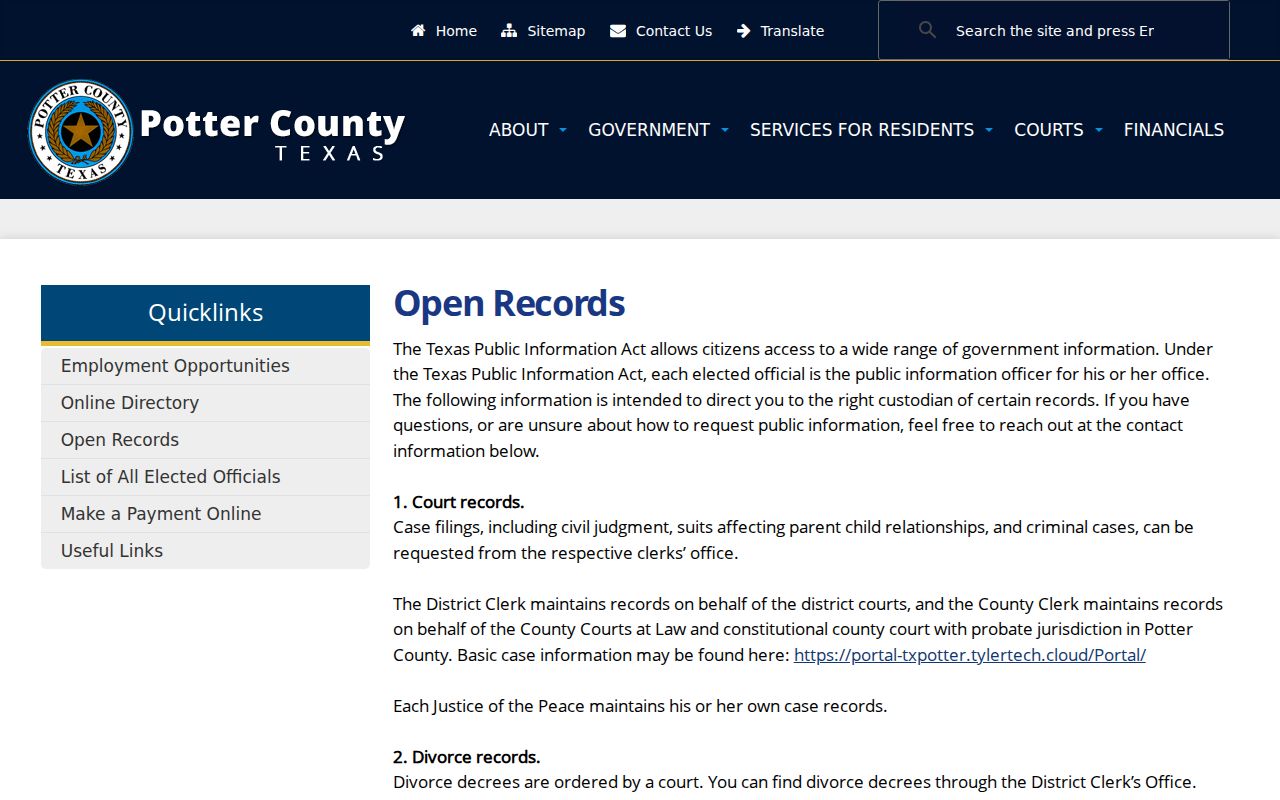
It keeps requests away from the wrong Amarillo office.
Potter And Randall Address Checks
County geography comes before any Amarillo residents directory search. PRAD serves the whole Potter-Randall appraisal area. A recorded instrument or court file must still be searched in the county that keeps it. Randall County's tax search runs by account number, owner name, mailing address, or property location. Its Street Index pairs a street with city, ZIP, address range, voting precinct, and justice-of-the-peace precinct. Amarillo mail often crosses county lines.
The City GIS and Planning Map add parcel, zoning, subdivision, school-boundary, FEMA, and overlay context. The City calls its parcel lines informational and approximate. They are not a survey or legal description. Locate the lot on the map first. Then use PRAD, the recorder, or a clerk for the record that answers the legal question, starting with the PRAD property-search destination.
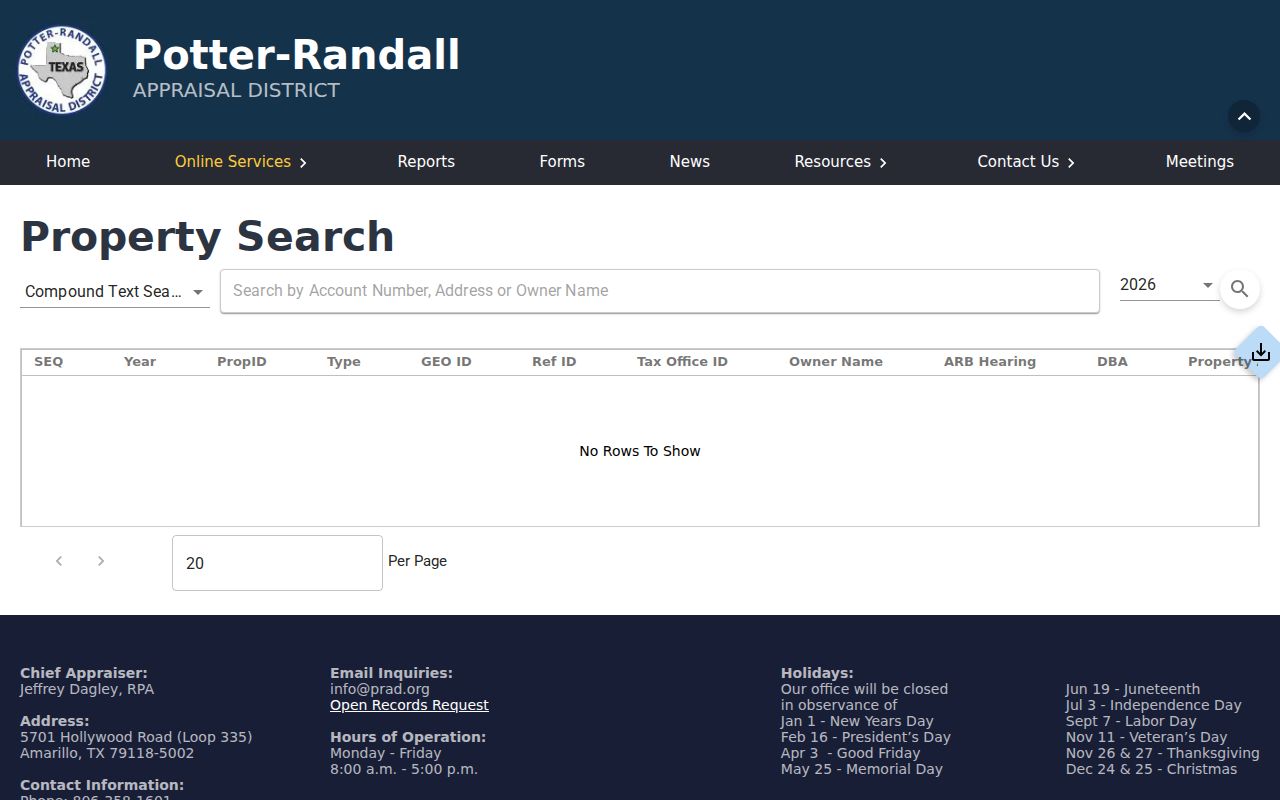
PRAD points to an appraisal association only, so a title conclusion still needs a recorded deed or clerk confirmation from the Potter County records.
Amarillo Parcel Search Fields
A search field is a clue, not proof. PRAD bills its service as a gateway to ownership, value, tax, and historical property data. The live form renders in JavaScript, so its exact field order is not published in a plain list. The City GIS parcel layer shows account, group, and addition identifiers. Those identifiers can tie a map polygon to an appraisal card. The layer carries no owner-name field. Pick the field that fits what you know. Keep the property identifier handy.
| Search key | Useful for | Amarillo caution |
|---|---|---|
| Street address | Locating a parcel or tax record | Normalize with USPS and check county first. |
| Account identifier | Matching PRAD and GIS context | It identifies a property account, not an occupant. |
| Addition or subdivision | Narrowing map and legal-description work | Use the recorder for a recorded instrument. |
| Owner or party name | Finding an appraisal or deed lead | Try spelling variants and retain dates. |
Use the City of Amarillo GIS for parcel and planning-map access.
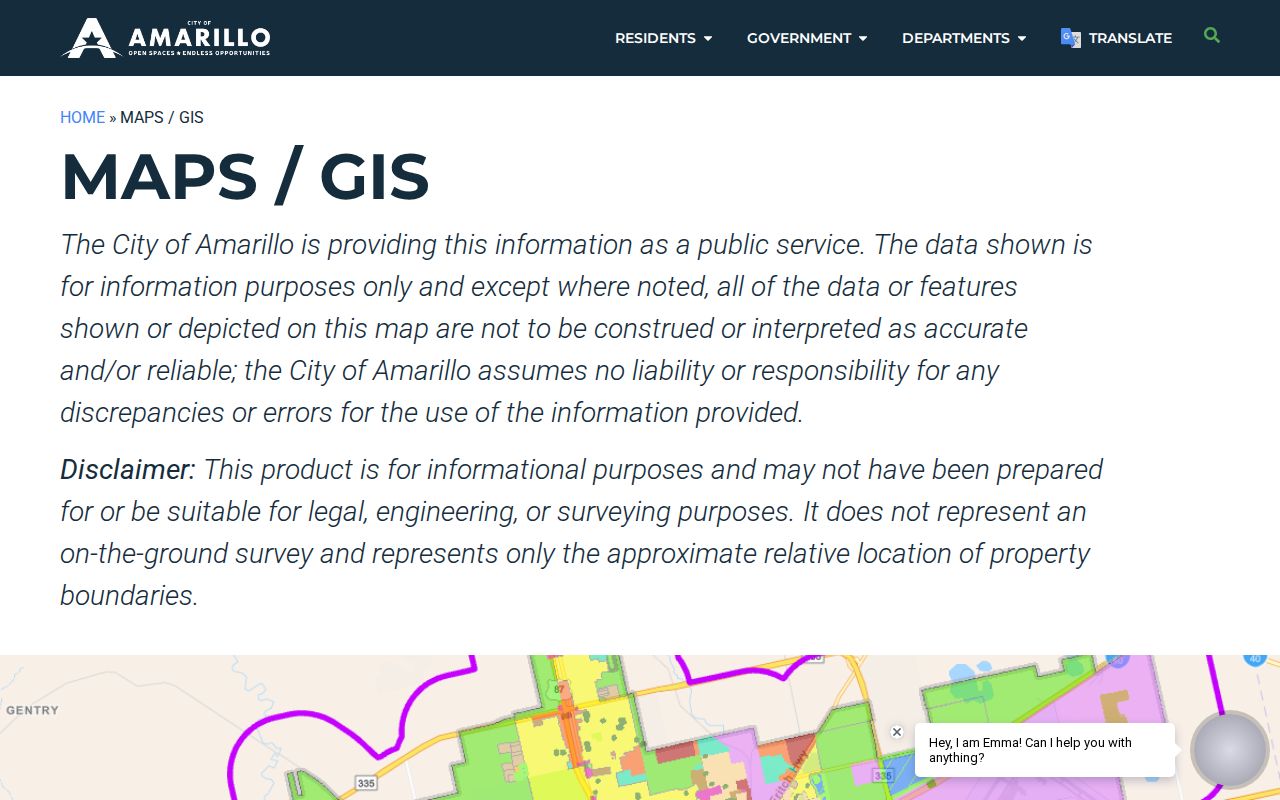
Use the Amarillo GIS map to place a parcel first, then carry that number into the appraisal or deed record search.
- Roll
- A maintained list or account set, such as an appraisal or tax roll.
- Index
- A finding tool that points to a record but may not be certified proof.
- Parcel
- A mapped tract used in appraisal and property administration.
- Criss-cross directory
- A reverse directory arranged by address rather than name.
Current Amarillo Resident Sources
Current directory-style sources each carry a narrow scope. A property record can tie an owner or tax name to a parcel. Potter's Official Public Records index lists parties to recorded deeds and instruments. VoteTexas offers status routes for one individual. County case portals list their own court information. Keep these Amarillo resident sources separate, since their dates, access rules, and meanings all differ.
| Record source | What it can confirm | Responsible keeper | Access route |
|---|---|---|---|
| PRAD property record | Appraisal and parcel association | Potter-Randall Appraisal District | Property-search gateway |
| Official Public Records | Recorded parties and instruments | Potter County Clerk | Online index, then clerk route |
| Voter status | Registration-status information | Texas and county election officials | Official status tool |
| Case information | Case parties and docket activity | County and district clerks | Portal and clerk request |
| Vital event record | Eligible or statutory public access | City Vital Statistics or DSHS | Official application |
Tracking one person instead of an address? Use the Amarillo resident lookup process to compare identifiers across sources.
Voter Status In Amarillo
Texas voter information follows election-specific rules. VoteTexas describes status lookup by VUID, by a Texas driver-license number if one was supplied at registration, or by first and last name. A status result is no license to rebuild registration fields. County and statewide list requests use prescribed forms, scope choices, a physical requester address, notarization, payment, and sometimes a deposit or estimate.
Amarillo's city elections run through two counties. A changed address goes through the official update process. Returned mail can put a voter in suspense. An old registration result is dated election information. It is not a broad statement of current residence.
Use the official Texas voter-status destination. The Potter County Official Public Records index covers the recorded-instrument side.
Save each voter roll result with its scope and date so the Amarillo lookup stays useful later.
Amarillo Vital And Court Limits
Vital records and court files answer narrow questions. They do not serve as a general name search. Amarillo Vital Statistics issues birth and death certificates for the City and Potter County. DSHS handles statewide guidance and index products. Current certified copies go only to a qualifying applicant. A legal representative or another legal authority also qualifies. Texas Government Code §552.115 opens birth records after 75 years and death records after 25. Even then, the office controls certification and copy procedure. For court files, pick the court level first. The Potter District Clerk keeps district-court matters. The Potter County Clerk holds the County Courts at Law, the constitutional county court, and probate. Municipal Court sits separate. A docket entry is not always a final disposition. An old filing address proves no present Amarillo connection. Check the Amarillo Vital Statistics access page for the order route that fits.
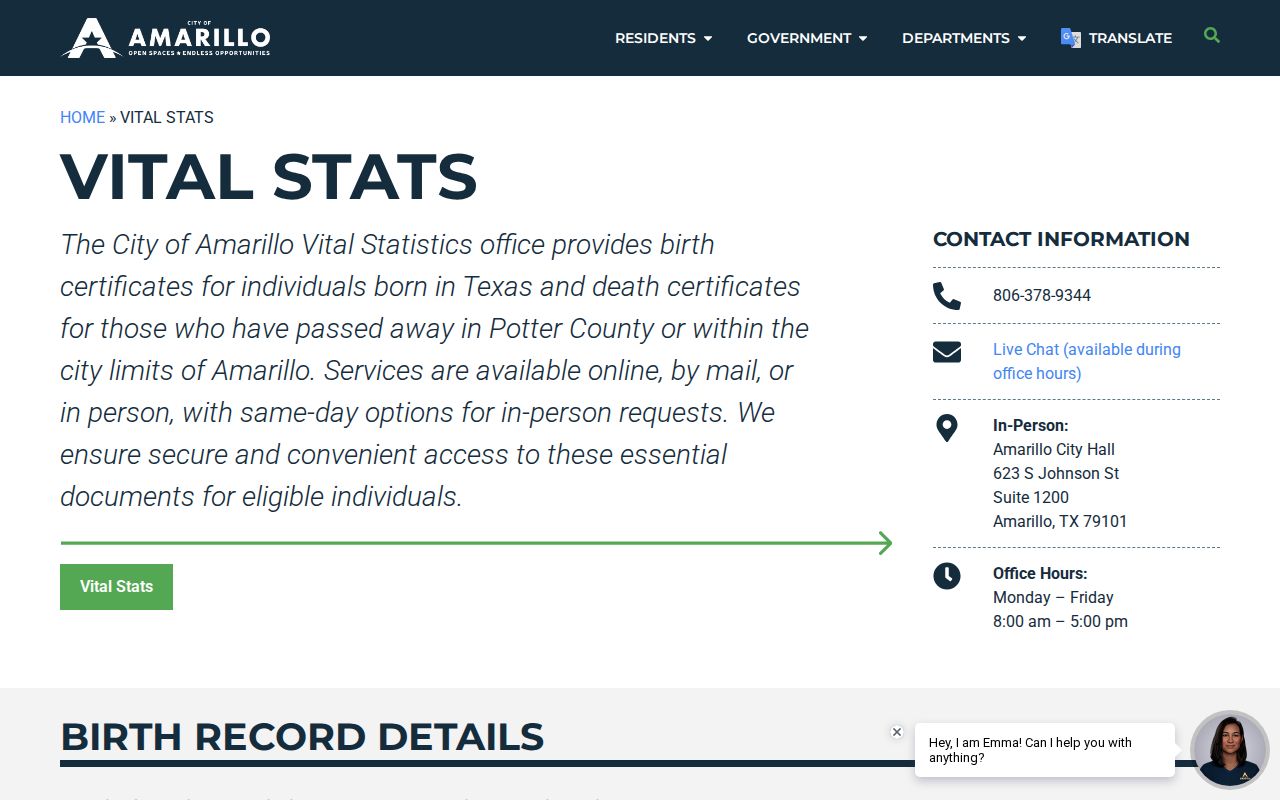
The City route picks the access channel fitting the event and eligibility.
Historical Amarillo Directory Collections
Old directories tie names to old Amarillo streets. The UT Center for American History cites Hudspeth Directory Company issues for 1917, 1918, 1919, 1920, 1921, 1922, 1924, 1927, 1931, 1932, 1933, 1936, 1943, 1947, 1949, 1966, 1967, and 1969. Telephone holdings show up separately for January 1953, November 1960, and December 1970. These are confirmed holdings. Not every year between survives online. Amarillo Library adds newspaper microfilm, maps, vertical files, family biographies, and genealogy databases. Treat each entry as a yearly snapshot. Record the spelling, street, number, and publication year. Follow the address into adjacent years and compare a newspaper, tax roll, deed, or map. The Amarillo city directory page lays out the full shelves and the reading method.
Amarillo Library And Map Evidence
When an online index runs dry, Amarillo Library's genealogy room is a practical fallback. Six dedicated genealogy computers anchor the room. They carry Ancestry.com, Heritage Quest, Newspapers.com Texas Edition, Find-a-Grave, and FamilySearch, plus newspaper microfilm, rare Sanborn books, maps, clippings, and vertical files. Hours run Monday through Thursday 9 to 7:30. Friday and Saturday hours are 9 to 6. Amarillo Genealogical Society volunteers give one-on-one help by appointment through Downtown Reference, and Sunday hours run 2 to 6. The 1908 Amarillo Sanborn set has 18 sheets. It can show a building footprint, street, block, and nearby landmark when an old directory entry needs context. It cannot identify every occupant. Nor can it establish title. The Panhandle-Plains Historical Museum Research Center in Canyon offers newspapers, maps, oral histories, photos, and manuscripts. It recommends appointments and closes from noon to 1. When a historical lead reaches a deed, marriage, probate, or other county record, visit the Potter County Clerk records and services page.
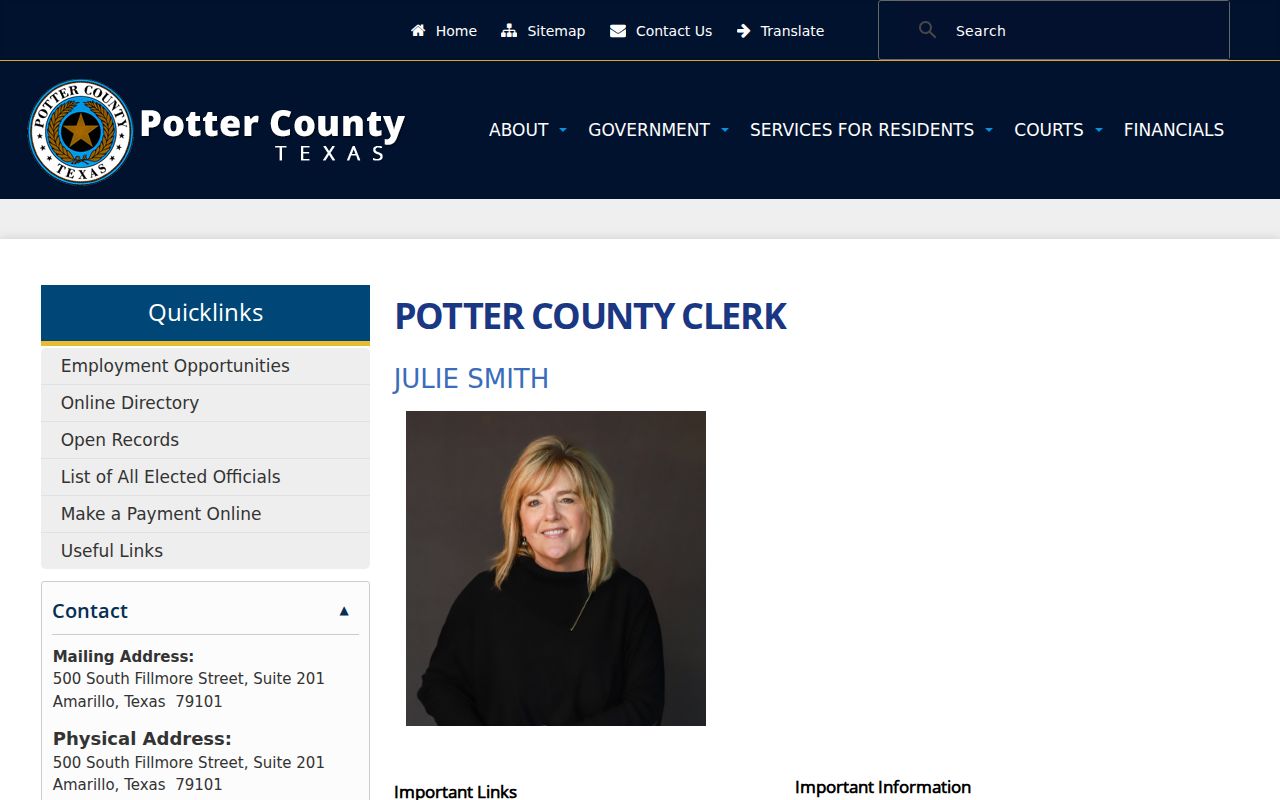
The clerk page routes library finds to the custodian.
San Jacinto Address Changes
Old Amarillo addresses need a before-and-after check. The San Jacinto Neighborhood Plan blames renamed and renumbered streets on annexation after the area's 1925 incorporation. Its 5th Street became 6th Avenue. The 100 blocks of Fifth became Sixth's 2700 block. Route 66 arrived in 1926. A directory, a newspaper, and a modern map may therefore show three address forms for one place. Record both street names and block numbers. Add the addition, legal description, and landmark, then search the Sanborn map, directory street index, and newspaper notices under each form. Never force an uncertain old number onto a modern parcel, because the original street form still carries evidence even when it no longer geocodes.
Official Records And Commercial Reports
Official records and commercial reports answer different questions. A public office can name the record type, custodian, date, and request method. A commercial report mixes public and brokered data. The mix can be stale. It can also be incomplete or tied to a same-name person, and the FTC notes that an opt-out from one service deletes no underlying government record or blocks reappearance from another source.
| Source type | Strength | Careful next step |
|---|---|---|
| Official index | Named custodian and record type | Check image access or request a certified copy. |
| Library directory | Dated address association | Compare adjacent years and another source. |
| Commercial report | Possible research lead | Verify important details with the responsible office. |
Note: Save the portal URL, record number, source date, and limit of each result, so any Amarillo finding can be checked later.
Amarillo Records Change Over Time
Portals and office details change. Potter County's FY 2025-26 budget describes a planned move. The Avenu 20/20 system would give way to an Avenu cloud records system. Preservation work is planned for the commissioners' books. The City moved Vital Statistics in February 2025. Its new home is the first floor of 623 S Johnson. A Municipal Court compliance campaign followed in February 2026. Docket and warrant status needs a current source. Use the official portal named by the custodian, and date each search. A live page may differ from an older link. Ask the office for its copy process. A focused Texas Public Information Act request identifies the government body and the existing record. It also names the date range, subject, and format. Texas Government Code Chapter 552 is a request route only. It does not create a new personal dossier. Use the Texas DPS registry only for the separate statutory record it provides.
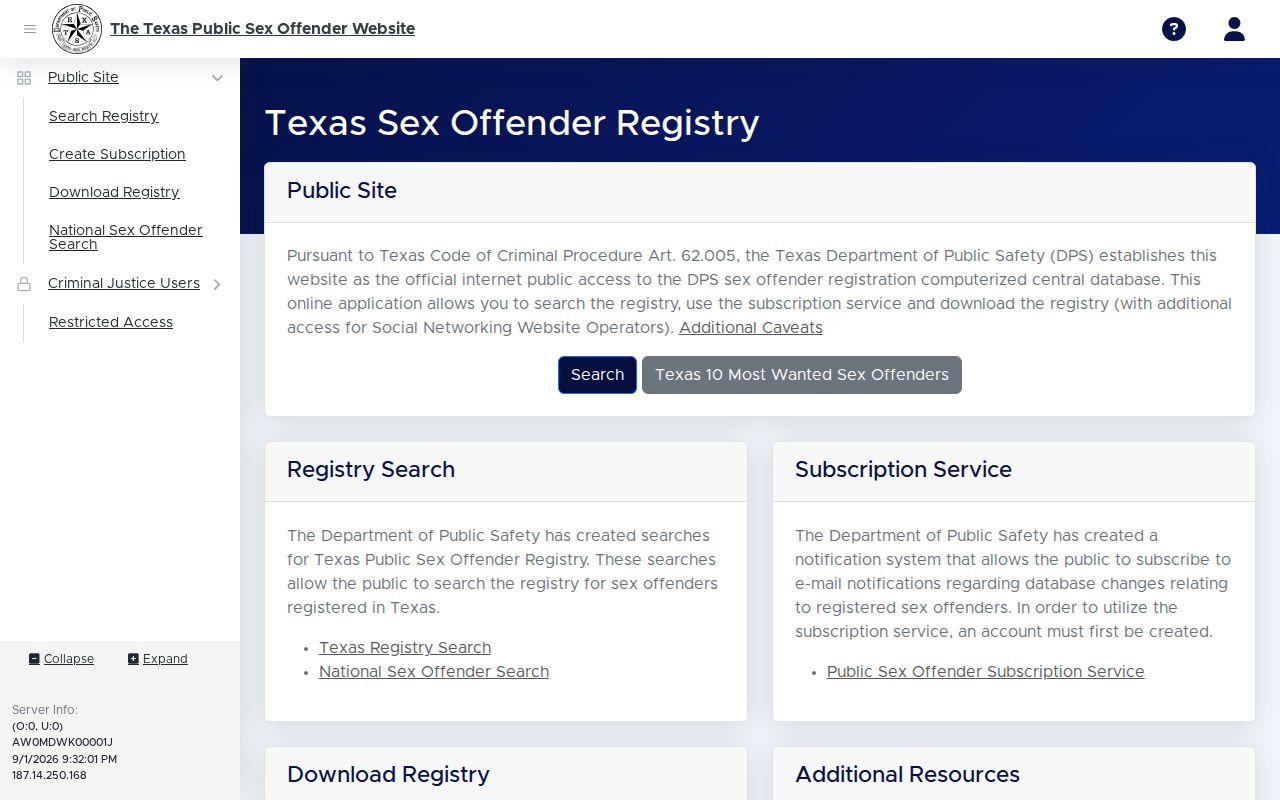
A registry result is dated statutory information. Keep it separate from unrelated court, custody, or address material.
Amarillo Recorder Index Clues
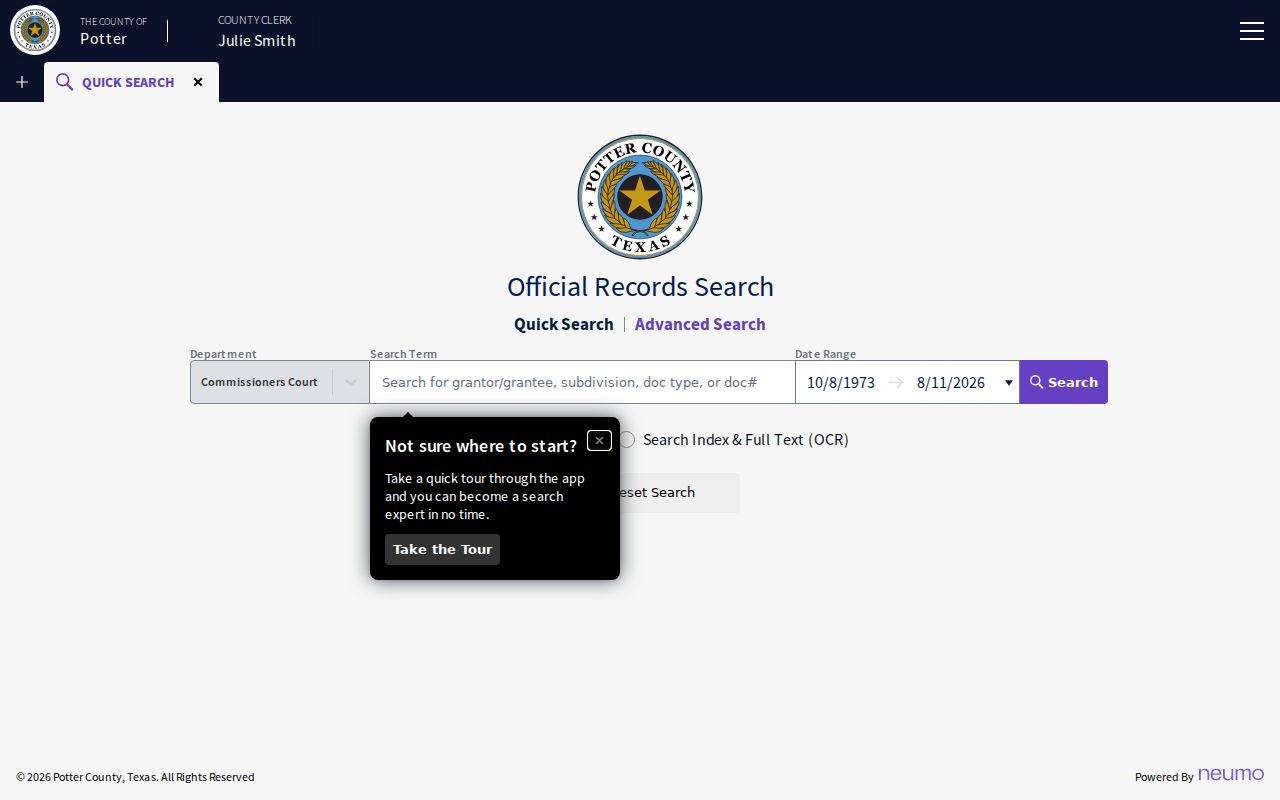
Potter County's Official Public Records portal gives an address search a documented instrument route. That footing matters. Its search methods include grantor or grantee, subdivision, document type, document number, indexed date, meeting date, OCR or full text, and quick periods. Stabilize the parcel first. Pin down its legal description too. Then hunt for the dated instruments tied to the property or its named parties. Log the instrument number, recording date, document type, parties, legal description, and whether the result was an index entry, an image, or a clerk-certified copy.
The portal disclaimer sets a useful limit. Its index is a guide, not a certified copy. Online material may be incomplete, unaltered, unavailable as an image, or redacted. Try spelling variations before assuming a person or instrument is absent. If an image is missing or a legal conclusion matters, use the Potter County Clerk procedure rather than treating a search result as final proof. This record trail can identify a transfer date. It cannot by itself identify a current Amarillo resident.
Amarillo Custody Source Boundaries
Custody, registry, booking, and court information are separate Amarillo record categories. The Potter County Sheriff's public-records page routes to its jail roster, book-ins, active warrants, and Records Department request process. One boundary is local. Its sex-offender list omits registrants inside Amarillo city limits. The official Texas DPS registry covers those cases statewide. A booking is not a conviction. A warrant can change. A registry record has its own statutory scope.
For state custody questions, TDCJ searches by name, SID, or TDCJ number, with an asterisk for partial matching. Its result is a custody snapshot, not a residential history. Federal Bureau of Prisons searching is a separate system, covering federal inmates from 1982 forward. Use the named custodian, keep the source date, describe the status exactly as the agency does, and avoid merging these results into a broad claim about an Amarillo person's residence.