
Amarillo City Directory Holdings by Year
The strongest confirmed Amarillo catalog citation is held by the University of Texas Center for American History. Its catalog identifies Hudspeth Directory Company Inc. issues for selected January years rather than a complete uninterrupted run. Amarillo Library, the Panhandle-Plains Historical Museum Research Center, and the Texas State Library and Archives Commission provide companion places to ask about gaps, newspaper corroboration, and regional context. The table separates confirmed years from collections that are useful but do not establish a complete shelf list.
| Amarillo collection | Confirmed years | Repository | Access route |
|---|---|---|---|
| Hudspeth city directories | 1917, 1918, 1919, 1920, 1921, 1922, 1924, 1927, 1931, 1932, 1933, 1936, 1943, 1947, 1949, 1966, 1967, 1969 | UT Center for American History | Cataloged holding; confirm access with UT |
| Amarillo telephone directories | January 1953, November 1960, December 1970 visible in the citation | UT Center for American History | Separate cataloged holding; confirm other years |
| Genealogy and local-history materials | Year-by-year directory shelf list not located | Amarillo Library | Ask Special Collections/Genealogy |
| Regional books, maps, newspapers, manuscripts, and photographs | Collection-specific | PPHM Research Center, Canyon | Contact first; appointment recommended |
Missing years should remain missing until a repository confirms them. The UT citation establishes the listed issues, but it does not reveal the page sequence, address arrangement, or full name-index design of every volume.
Amarillo Directory Years at UT
The UT directory record gives a reliable year checklist before a trip or a reference request. Start with the closest confirmed year before and after the event being researched. The companion telephone-directory record offers three separately visible issues, which can help bridge later intervals. Do not infer that all years between cataloged volumes survive or that the holdings are digitized.
UT’s catalog page for the Amarillo holding documents the publisher and confirmed issues.
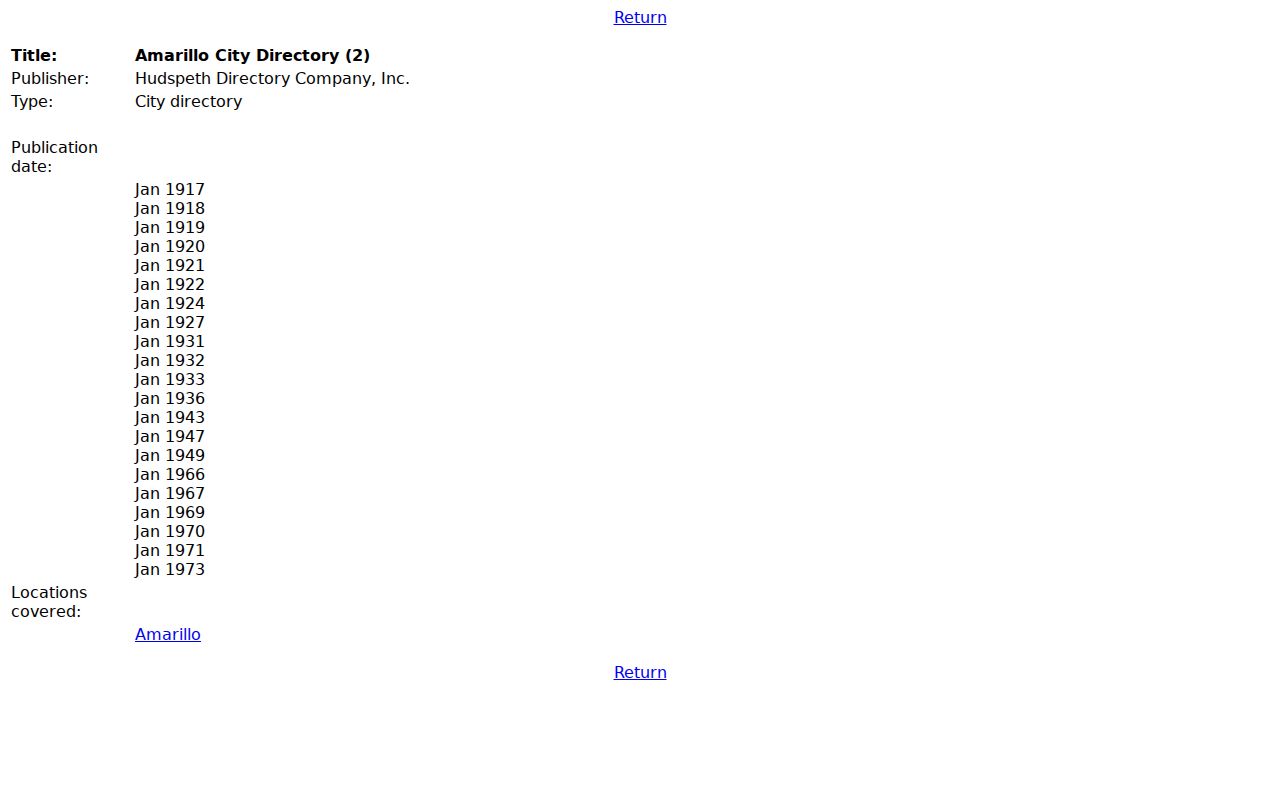
The catalog image is a starting point for planning a directory request. It is not an image of an individual directory page or proof of a person’s residence.
Reading Amarillo Directory Entries
For the Amarillo volumes cited in the research, begin with the name index and write down the street and house number. An occupation can help separate two people with the same name. Classified and business pages can serve as a second check when the address and time frame fit. The available citation does not establish every entry field or abbreviation used in every edition, so the volume’s own front matter and abbreviations should be read before interpreting a mark.
| Name as printed | Copy the spelling, initials, and any variation exactly. This gives a search term for nearby years and newspaper microfilm. |
|---|---|
| Street and number | Record both, then preserve the year. A number alone may not survive renumbering. |
| Occupation or business context | Use it only when it helps distinguish a same-name person or corroborate a classified listing. |
| Edition details | Keep the publication year, publisher, page, and repository with the note. |
| What it supports | A directory-listed association for that edition, not certified title, a current address, or an unbroken residence history. |
- Criss-cross directory
- A directory arranged by street and address rather than by surname. Check the specific volume because a criss-cross section was not confirmed for every Amarillo issue.
- Householder index
- An index organized around a household or address. It can help when the known detail is a location instead of a name.
- Abbreviation key
- The volume’s explanation of shortened labels. Photograph or transcribe it before assigning meaning to an abbreviation.
If a needed detail is not printed, do not supply it from memory or a later source. Keep the entry as a dated lead, then compare it with the next available volume, a newspaper item, tax-roll context, or a map. That approach preserves the difference between what the publisher printed and what another custodian recorded.
Amarillo Library Directory Research
The Amarillo Library genealogy collection is a practical local stop when a directory entry needs context. It provides six genealogy computers with Ancestry.com, Heritage Quest, Newspapers.com Texas Edition, Find-a-Grave, and FamilySearch. The same collection lists archived Amarillo newspapers on microfilm, family biographies, county histories, pedigree charts in Vertical Files, rare Sanborn Map Books, maps, and clipping collections. These sources can test whether a directory name and address belong to the same historical person.
Observed library hours are Monday through Thursday, 9 to 7:30; Friday and Saturday, 9 to 6; and Sunday, 2 to 6. Special Collections/Genealogy can be reached at 806-378-3049. The library’s October 2024 notice also describes appointment-based, one-on-one help from Amarillo Genealogical Society volunteers through Downtown Reference. Its local catalog is a discovery tool, not a promise that a named item is online.
Amarillo Newspaper Runs for Directory Gaps
A directory gap is often best handled with a dated newspaper search rather than an assumed address. The Texas State Library and Archives Commission inventory identifies Amarillo Daily News runs for 1911–1976, 1978–1980, and 1981–2001, alongside titles such as Amarillo Daily Tribune, Amarillo Globe, Amarillo Globe-News, Amarillo News, Amarillo Star, Daily Panhandle, and Weekly Amarillo News. The inventory shows title changes and gaps, so it is a route map, not confirmation that each issue or page is locally digitized.
TSLAC’s Amarillo newspaper inventory shows the title and date-run context behind a directory search.
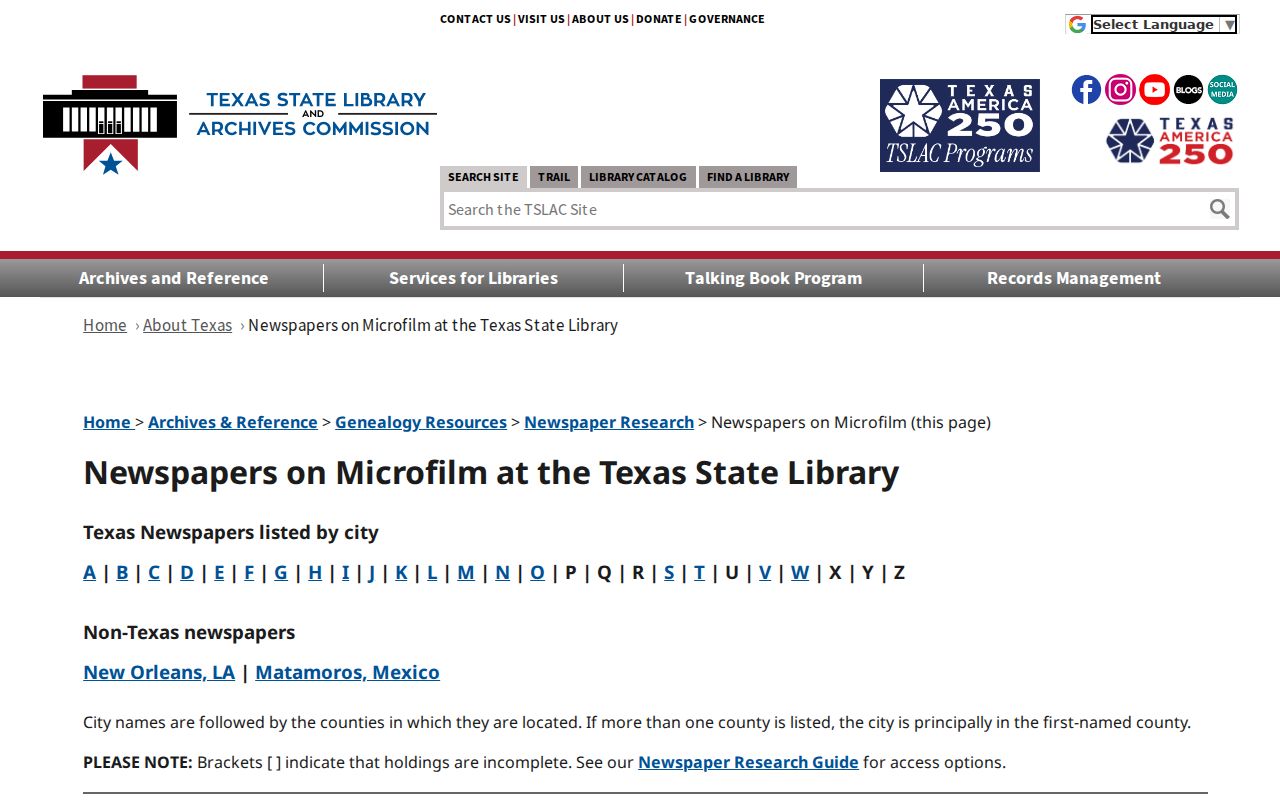
Use a directory year to narrow the newspaper date range, then preserve the paper title and issue date with any finding. An advertisement, notice, or obituary is independent corroboration, not a replacement for the directory edition.
Amarillo Directory Context at PPHM
The Panhandle-Plains Historical Museum Research Center in Canyon holds regional books, periodicals, newspapers, maps, manuscript collections, trade literature, oral histories, and photographs. It is especially useful when a directory gives only a name, address, or business connection and the next question concerns the household’s Panhandle setting. Texas Archives Online describes the repository and finding-aid context, while the Portal to Texas History partner page can identify digitized material without suggesting complete Amarillo coverage.
Research Center hours are Tuesday through Friday, 9 to noon and 1 to 5. An appointment is recommended. Contact the center at 2503 4th Ave, Canyon, by phone at 806-651-2261 or email at wstricker@wtamu.edu. Ask about a specific year, street, surname, collection, and reproduction rules instead of requesting a broad person search.
The PPHM Research Center page confirms the repository’s regional research role and access guidance.
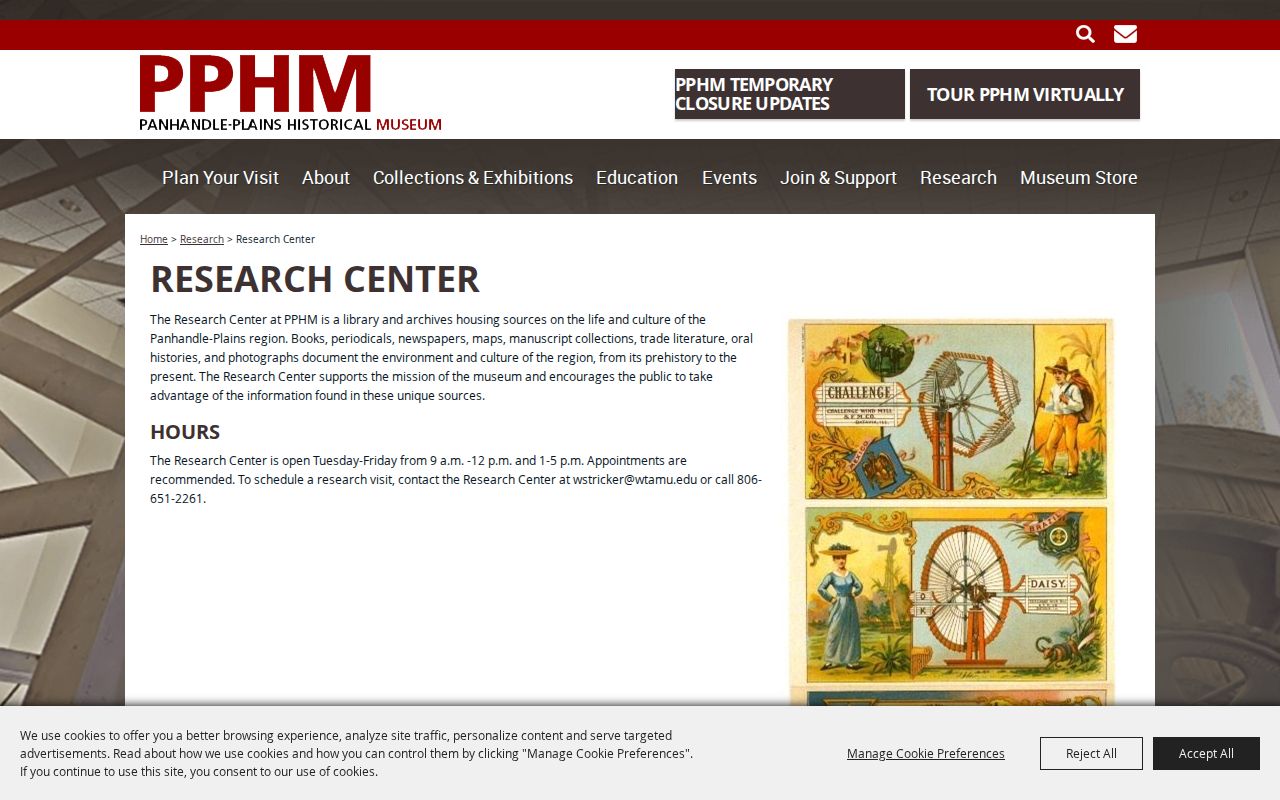
The museum is in Canyon, not Amarillo. That separation matters when scheduling research, but its Panhandle collections can strengthen an Amarillo directory trail.
Courthouse Roots in Amarillo Records
Older Amarillo directories sit within a record system shaped by Potter County’s courthouse and rail history. Potter County was created in 1876 and organized in 1887. The county seat grew where rail lines met, and the Texas Historical Commission marker records an 1888 first courthouse in Old Town Amarillo. A 1920s oil boom nearly tripled the population and brought major downtown construction. Those changes help explain why early twentieth-century newspapers, deeds, tax records, maps, and directory entries often become denser together.
A directory entry remains one layer. County clerks recorded instruments and marriage material; district clerks kept pleadings and judgments; city offices created maps and permits; libraries and archives preserved printed and manuscript sources. Match the year of the Amarillo directory to the year of the supporting record rather than treating a modern portal as a full substitute for the original series.
- 1876: Potter County was created.
- 1887: The county was organized and the county seat was established where rail lines met.
- 1888: The first courthouse stood in Old Town Amarillo.
- 1920s: Oil-boom growth nearly tripled the population and increased downtown construction.
Sanborn Maps for Amarillo Directory Addresses
The Library of Congress 1908 Amarillo Sanborn map record has 18 sheets. It can help interpret a historical address by showing a block, building footprint, use, intersections, and nearby landmarks. That matters when the printed entry points to a hotel, boarding house, church, commercial building, or residence. The map does not name every occupant and does not establish title.
Start with the sheet map, identify the street or block, then inspect the relevant sheet before returning to the directory and newspaper. This method is most useful when an address needs geographic context, not when a name alone is being searched.
Amarillo Street Names in Directory Years
Historical addresses in Amarillo may not map cleanly to a modern street number. The San Jacinto Neighborhood Plan reports that annexation after the area’s 1925 incorporation led to renaming and renumbering: 5th Street became 6th Avenue, and the former 100 blocks of Fifth became the 2700 block of Sixth. Route 66 arrived in 1926. A surname search that fails under a modern address should be repeated with the old street name, old number, block, addition, and nearby landmark.
The change is a reminder to keep historical and modern forms side by side. A newspaper notice or directory entry may use the earlier form, while a parcel map, postal lookup, or clerk record uses the present address. The match becomes stronger when the block, addition, building use, or mapped landmark also agrees.
Trace Families Through Amarillo Directories
Build a household trail from dated, independent sources. A person’s first appearance in a confirmed Amarillo volume establishes a starting point for the printed record, not an arrival date. Follow that surname into the next available directory, note spelling changes and street changes, and use the library’s microfilm, maps, vertical files, or a repository question when there is a gap. Pair a directory entry with the source year, not a guessed decade.
- Choose the closest confirmed directory year and copy the name, street, number, and edition details exactly.
- Check the next available year for the same spelling and for plausible variants.
- Compare the address with a newspaper item, tax-roll guide, Sanborn sheet, or other dated record.
- For an old street, record its earlier and later name or numbering form before searching again.
- Ask the holding archive a narrow question, such as whether it has a named year and whether an address index is included.
A disappearing name can mean a move, death, omission, changed spelling, or a missing directory year. Treat each possibility as a question for the next dated source. For a house-centered trail, the Previous Residents page follows the deed, tax, directory, and map sequence without calling a recorded owner a confirmed occupant.